Winter Gold: Harvesting and Dedication in the Ancient Olive Groves
The olive harvest was a slow and patient activity. It was done by hand or with wooden sticks. The olives fell onto cloths spread out on the ground. Ladders were used to reach the highest branches. Entire families participated in the work. The olives were then taken to the olive mills. The oil was intended for domestic use and for sale. It represented a precious resource. Olive growing marked the rhythm of rural life.
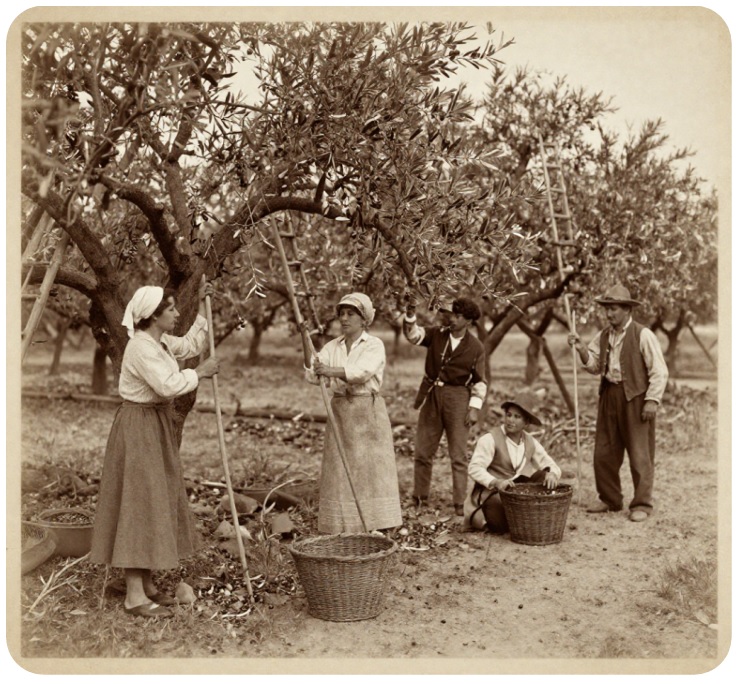
In the autumn and winter months, the centuries-old olive groves of this traditional fortified farmhouse became the center of an activity where olive oil was considered an economic and livelihood resource of inestimable value. Precisely because of the importance of this product, attention to recovery was total and no waste was tolerated. While the more experienced men positioned the ladders and shook the branches, at the same time, others proceeded to meticulously gather all the olives that had already fallen spontaneously onto the ground in the previous days. This task, which required endless patience and sharp eyes, was traditionally entrusted to the women and children of the rural community. Bending for hours over the soil, they examined the ground inch by inch to recover every single fruit before it could be stepped on. This coordinated and simultaneous effort allowed them to quickly fill the sacks, which were then loaded onto carts to be transferred to the mills, guaranteeing both the commercial profit of the estate and the essential caloric resource for the winter nourishment of the farmers.